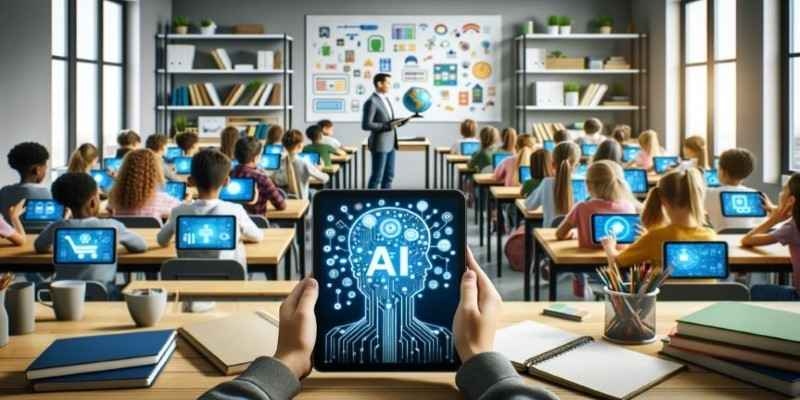
Creating educational content goes beyond listing facts—it’s about engaging learners, structuring ideas effectively, and simplifying tough concepts. While traditional methods remain useful, AI tools like ChatGPT have introduced new possibilities. It’s not about replacing educators or textbooks; rather, it’s a way to streamline lesson planning, provide personalized explanations, and enhance the learning experience.
ChatGPT is more than a chatbot—it can clarify complex topics, generate detailed lesson plans, and summarize materials. By incorporating it thoughtfully, educators and students alike can save time, maintain quality, and explore innovative approaches to learning and teaching.
Building Blocks: How ChatGPT Supports the Learning Journey
Understanding how to use ChatGPT in education starts with the basics. At its core, ChatGPT can create, translate, simplify, or reorganize content depending on your needs. If you give it a topic like photosynthesis or World War II, it can instantly generate an age-appropriate summary. What makes this different from a search engine is how the output is written—it’s fluid, human-like, and easy to adjust on the spot.
Let’s say you’re teaching middle school students about geometry. You can ask ChatGPT to generate an overview of triangles, focusing on real-life examples like bridges or buildings. If that’s too advanced, you can ask it to rewrite it for a younger audience. If you need questions and answers to quiz your students, it can do that, too. Want the same content in another language? Done.
One major strength here is adaptability. Every learner absorbs information differently—some respond better to metaphors, others to plain facts. You can instruct ChatGPT to present content in several formats until you find what clicks. It’s like having an educational assistant that never gets tired and works at your pace. That kind of flexibility makes it easier to personalize lessons or study sessions without starting from scratch each time.
That said, ChatGPT works best when it has a clear direction. If you just type "Explain algebra," the answer will be too broad. The key is to give it a focused prompt: "Explain linear equations to a high schooler who struggles with math and prefers visual learning." The more details you give, the better the content gets. It's not about replacing human thinking—it's about making it faster to get to the point where real teaching can begin.
From Planning to Practice: Using ChatGPT in Real Educational Settings
The most practical use of ChatGPT is lesson planning. Educators can save hours by generating outlines and tweaking them to fit their teaching style. A typical workflow might look like this: start with a topic, ask ChatGPT for a five-day lesson plan, and revise the structure based on the classroom environment. If something feels off, you can prompt the AI to adjust—say, by focusing more on visual aids or simplifying technical language.
Another underrated benefit is the way ChatGPT helps explain things differently. If a student is stuck on Newton’s Third Law, you can ask ChatGPT for multiple versions of the explanation: a formal one, a metaphor-driven one, or even one written as a story. This can help a struggling learner feel less overwhelmed.
In self-directed learning, ChatGPT can serve as a study partner. Learners can ask follow-up questions, clarify ideas, and even quiz themselves—all within the same interface. It’s a safe space to ask “dumb” questions without judgment, which can boost confidence and lead to better long-term understanding.
Teachers working with multiple languages can also benefit. Whether translating instructions for multilingual classrooms or producing bilingual worksheets, ChatGPT can help educators support inclusivity without extra effort. That kind of support matters more than it might seem—it can open doors for students who otherwise get left behind.
It’s also worth noting that ChatGPT is useful for creating alternative formats. Audio scripts for podcasts, dialogue-based explanations, roleplays, or even short fictional stories with embedded learning—these formats can help break the monotony of plain text and spark interest. That kind of creative freedom is a major leap from traditional materials.
What to Watch For: Responsible Use and Practical Boundaries
Even though ChatGPT is useful, it’s not flawless. It can sometimes offer outdated or inaccurate information, especially if the prompts are vague or poorly worded. That’s why it’s important to double-check facts, especially in subjects like science, history, or medicine. It’s not meant to replace textbooks or academic sources—it’s meant to support them.
There's also a risk of over-reliance. If students begin using ChatGPT to write essays or answer homework questions without understanding the material, that's a problem. In those cases, the AI becomes a shortcut instead of a tool. The challenge for educators is to guide students in using ChatGPT wisely, encouraging curiosity, not laziness.
Ethical concerns are also part of the conversation. Plagiarism, bias, and misinformation are real issues. Educators should set clear guidelines on how ChatGPT should and shouldn’t be used. For example, generating practice problems is fair game, but copying full answers without analysis defeats the purpose of learning. The same goes for academic writing—using AI to brainstorm ideas is one thing, but passing off AI-generated content as original thought crosses a line.
Privacy is another area that requires caution. ChatGPT doesn't store your specific input, but schools and institutions still need to consider how and when to use AI tools to protect students' identities and data.
Finally, ChatGPT should be seen as a tool that works with human input, not instead of it. The most effective educational content still comes from people who understand nuance, emotion, and cultural context. AI can help create drafts, explain facts, or speed up planning—but the human touch is what makes the content meaningful.
Conclusion
Adding ChatGPT into your educational approach can transform the way you create and share knowledge. By using this AI tool thoughtfully, educators can streamline lesson planning, personalize learning experiences, and explore new methods of engagement. While it’s important to remain vigilant about accuracy and ethical use, the benefits of efficiency, adaptability, and inclusivity are undeniable. As AI continues to evolve, embracing tools like ChatGPT will help modernize education, making it more accessible, diverse, and effective for everyone involved.