The peer review process has long been a cornerstone of academic publishing, ensuring that research meets rigorous standards before it’s shared with the world. But as technology advances, the question arises: can AI step in and take over the complex and often time-consuming task of reviewing research? With its ability to analyze vast amounts of data and detect patterns, AI promises to streamline the process, offering quicker and potentially more objective reviews. Yet, despite the allure of automation, can a machine truly replace the nuanced expertise and judgment that human reviewers bring to the table? Let’s find out.
The Role of Human Reviewers in Peer Review
Human reviewers are at the heart of the peer review process, tasked with evaluating the validity, methodology, and impact of research before it's published. These experts are not only responsible for verifying factual accuracy but also for offering valuable feedback and suggestions to enhance the research. It's a rigorous process that needs an intimate knowledge of the subject. It is most often time-consuming, with experts carefully examining detailed data and determining where improvement can be made.
What really distinguishes human reviewers is their experience and knowledge. Decades of research, study, and hands-on experience enable them to spot the nuances that others may miss—be it experimental design flaws, biases that have gone unnoticed, or missing data. Their familiarity with the context of the research in the wider field also brings in observations that computers cannot yet make.
However, the peer review system has its flaws. It tends to be sluggish, with papers stuck in transit for months, and occasionally tainted by unconscious—sometimes conscious—bias toward high-profile researchers or high-status institutions. These drawbacks have led to debates about whether AI might improve peer review so that it becomes quicker, more streamlined, and less susceptible to human error but still retains the quality and rigor necessary for scientific publishing.
How AI Could Transform Peer Review?
AI might improve peer review in several important ways, delivering improvements in speed, fairness, and precision. Perhaps the biggest advantage AI has is its ability to quickly process large amounts of data. In peer review, this would mean that AI could read research papers much quicker than human reviewers, catching potential errors in research methodology, data analysis, or even language use.
AI can also enhance plagiarism detection. While traditional tools catch obvious cases, AI can go further by recognizing subtle writing style patterns and identifying more nuanced forms of plagiarism that may otherwise go unnoticed. Additionally, AI's capabilities in statistical analysis could help identify errors or inconsistencies in data, ensuring that the research's validity isn't compromised.
Beyond the paper itself, AI could also help reduce bias in the peer review process. For example, AI could detect gender, racial, or institutional biases in reviewer comments, promoting a more equitable and impartial review. By offering objective analysis, AI could help counteract the unconscious biases that human reviewers may introduce.
Furthermore, AI’s ability to quickly summarize and categorize research papers could make the peer review process more efficient. This would allow human reviewers to focus on more complex evaluations, ultimately speeding up the review timeline and making the process more streamlined.
Can AI Replace Human Reviewers?
While AI holds promise in enhancing the peer review process, it is unlikely to fully replace human reviewers due to several key limitations. One of the main challenges is AI's inability to understand context the way humans do. Human reviewers bring their knowledge, experience, and intuition to the process, enabling them to interpret the broader implications of a study and its relevance to the field. AI, on the other hand, relies on algorithms and data patterns, making it difficult for machines to grasp the nuanced context of a research paper.
For instance, AI can easily identify statistical errors or inconsistencies in data, but it may struggle to determine whether those errors are critical to the research’s overall findings. Human reviewers can assess whether a mistake significantly impacts the validity of the study or can be overlooked. This level of judgment is something AI cannot replicate easily.
Furthermore, human reviewers offer feedback that goes beyond technical details. They can suggest improvements to writing clarity, provide insights into how the research fits into the broader academic conversation, and evaluate the potential impact of the work. AI can analyze language but cannot offer such nuanced, constructive feedback.
Another challenge for AI is domain-specific knowledge. While AI can analyze data, it requires a deep understanding of the subject matter to make informed judgments about the quality of the research. Lastly, ethical concerns arise as AI systems are limited by the data they are trained on, which could lead to biased or incomplete reviews and reduce diversity in perspectives.
The Future of AI in Peer Review
AI is poised to play an increasingly significant role in the future of peer review, although it won't replace human reviewers entirely. By automating time-consuming tasks such as plagiarism detection and statistical error checking, AI can allow human reviewers to focus on more complex aspects of evaluation. Additionally, AI can enhance efficiency and fairness by identifying biases and providing objective analysis.
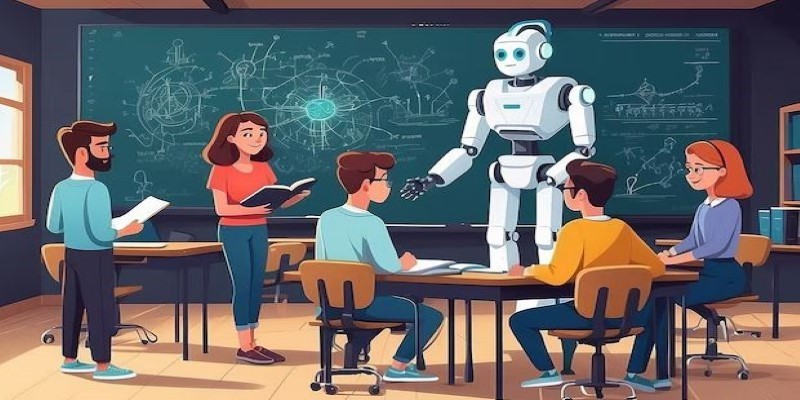
The future of peer review will likely involve a collaborative approach, where AI serves as a valuable tool to support human reviewers. This partnership will help streamline the process and improve accuracy, but human expertise and judgment will remain crucial for maintaining the rigor and reliability of the peer review system.
Conclusion
AI has the potential to enhance the peer review process by making it faster and more efficient and reducing bias. While it can't fully replace human reviewers, AI can assist with tasks like plagiarism detection, statistical analysis, and identifying bias. Human reviewers will remain crucial in evaluating the quality, significance, and broader context of research. The future of peer review lies in a collaboration between AI and human experts, working together to maintain the rigor and credibility of scientific research.