In recent years, technology has completely transformed the way we approach education and training, particularly when it comes to technical skills. Virtual Reality (VR) and Artificial Intelligence (AI) are two cutting-edge technologies that have gained a lot of attention in fields such as medical training, engineering, and other specialized disciplines.
When combined, these technologies have the potential to revolutionize how individuals learn complex skills, providing an immersive, interactive, and highly effective training experience. This article explores how VR and AI are being used for technical skill development, focusing on their application in medical training and similar fields.
How VR and AI Work Together to Enhance Learning?
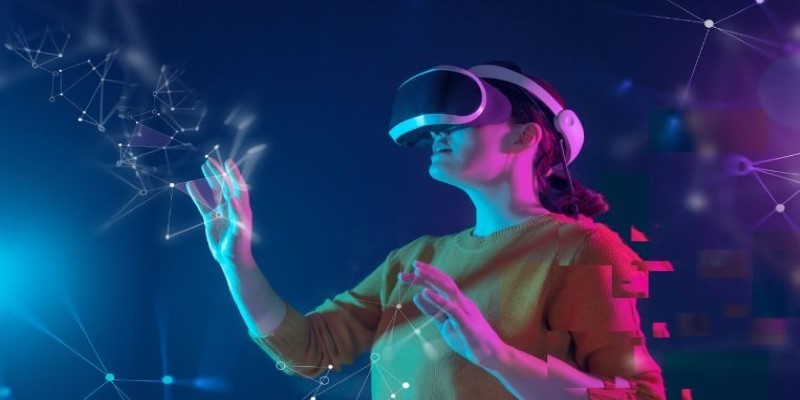
Virtual Reality is an immersive technology that constructs a simulated world where the users can interact, learn, and develop skills. When combined with Artificial Intelligence, which responds based on data to make decisions or modify responses in real time, the outcome is an interactive and individualized learning experience. In areas of technology, where accuracy and hands-on training are paramount, this combination enables the learners to learn by doing without the repercussions of actual errors.
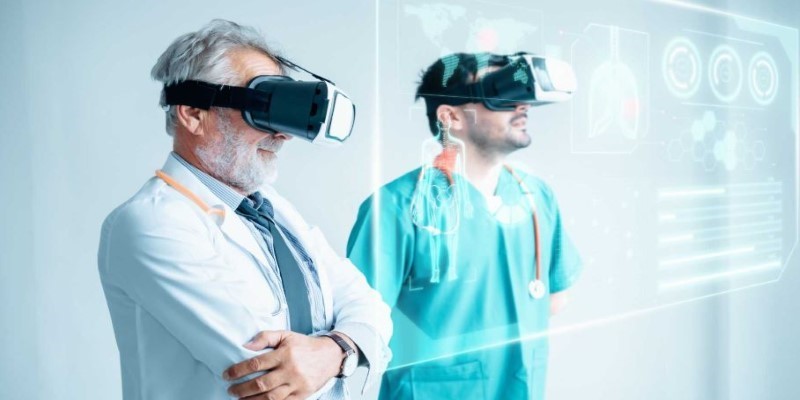
AI has an imperative role in ensuring that the environment in VR caters to the learner's demands. For example, during medical training, AI can monitor how the trainee is doing, offer real-time feedback, and vary the tasks' difficulty as a function of the learner's performance. Such a mechanism brings about more specialized and efficient training, with an experience that is as challenging as supportive. The immediate feedback enables students to recognize their errors and correct them instantly, an essential element in acquiring technical skills.
In medicine, VR can also mimic surgeries, diagnostics, and patient consultations and allow students to practice procedures without the expense or risk of needing actual patients or costly physical models. This method of training not only assists with developing competence but also dramatically limits the possibility of mistakes when practitioners transition to live applications.
Applications in Medical Training
Medical training requires an incredibly high level of precision, and VR combined with AI is helping to bridge the gap between theoretical knowledge and practical expertise. One of the primary advantages of using VR in medical training is the ability to replicate high-risk scenarios in a safe environment. Medical students can practice surgeries, medical procedures, and patient care routines repeatedly without any of the dangers associated with real-life practice.
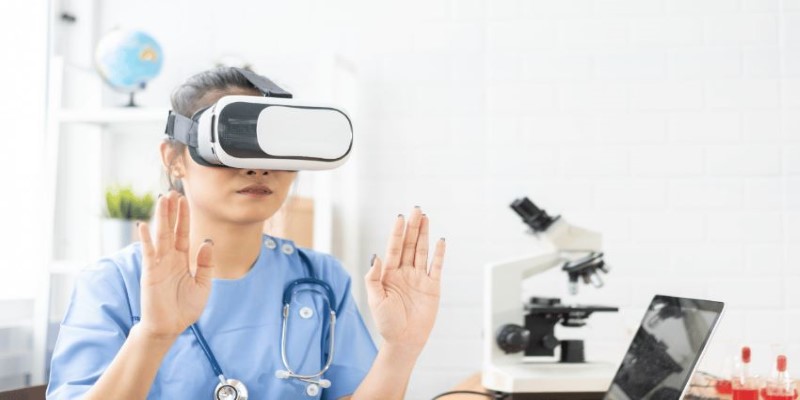
For example, VR simulations can allow a trainee to practice performing heart surgery or diagnosing a rare disease, scenarios that would be difficult, expensive, or dangerous to replicate in a traditional classroom setting. AI enhances this experience by providing real-time feedback on the trainee's actions, ensuring that they can adjust and improve in real-time. If a trainee performs a procedure incorrectly, the AI can notify them and explain how to correct their mistakes, making the learning process more efficient and personalized.
The use of VR for anatomy lessons also allows students to interact with 3D models of the human body, providing a more detailed and comprehensive understanding than textbooks or traditional 2D diagrams can offer. By combining these immersive tools with AI-powered assessments, medical students can learn faster, practice more efficiently, and ultimately gain the skills they need to save lives.
Real-World Examples of VR and AI in Medical Training
Some medical schools and institutions have already started incorporating VR and AI into their curriculum with promising results. For instance, several universities use VR simulations to teach students about surgical procedures. These VR simulations offer a lifelike environment where students can practice surgeries repeatedly, allowing them to gain confidence and proficiency before working with actual patients. The integration of AI also enables these programs to assess each student’s technique, providing personalized learning pathways and targeting areas that need improvement.
One notable example is the partnership between the medical training company Osso VR and several leading healthcare institutions. Osso VR uses immersive VR environments enhanced by AI to teach surgical procedures such as knee replacements or spinal surgeries. The AI tracks the user's movements and performance during the simulation and offers feedback, which can significantly enhance the learning experience.
Additionally, companies like Medical Realities have developed AI-driven VR platforms designed to teach medical professionals various skills. These platforms allow trainees to experience simulated surgeries, diagnose patients, and manage complex medical scenarios, all while receiving real-time data and feedback from AI-powered systems. This fusion of VR and AI not only improves the quality of training but also offers a more cost-effective solution for medical institutions.
Beyond Medicine: VR and AI in Other Technical Fields
While medical training is one of the most well-known areas benefiting from VR and AI integration, these technologies are also making significant strides in other technical fields. In industries like engineering, aviation, and manufacturing, VR and AI are being used to simulate complex systems, machinery, and scenarios that require hands-on training.
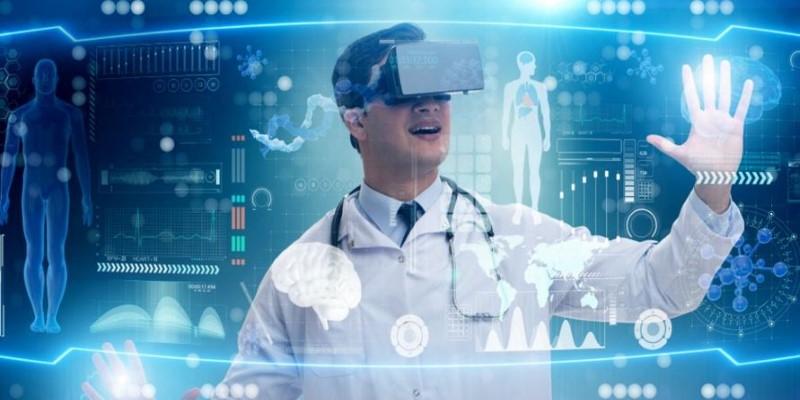
For example, in aviation, pilots use VR to simulate flight conditions, enabling them to practice in various weather conditions, emergencies, and high-risk scenarios without leaving the ground. AI can track the pilot's decisions, performance, and reactions, providing critical feedback to help them improve their skills and response times.
In engineering and manufacturing, VR allows trainees to interact with machinery and design systems and understand complex technical processes without the need for expensive prototypes. When combined with AI, these training modules can adjust difficulty levels, track performance, and offer insights into how to operate machinery safely and efficiently. This combination not only enhances skill development but also helps reduce the cost of training programs, making them more accessible and effective.
Conclusion
The integration of VR and AI in technical skill development is revolutionizing how individuals learn and refine their skills. These technologies offer immersive, hands-on experiences with real-time feedback, making training more effective and accessible. In fields like medical training, engineering, and aviation, VR, and AI enable learners to practice complex procedures safely and efficiently. As these technologies evolve, they promise to further enhance education and professional development, preparing individuals for success in an increasingly technical world.